
From Ideas to Action: TCIP Center’s Winter Working Group Meeting
January 23, 2026
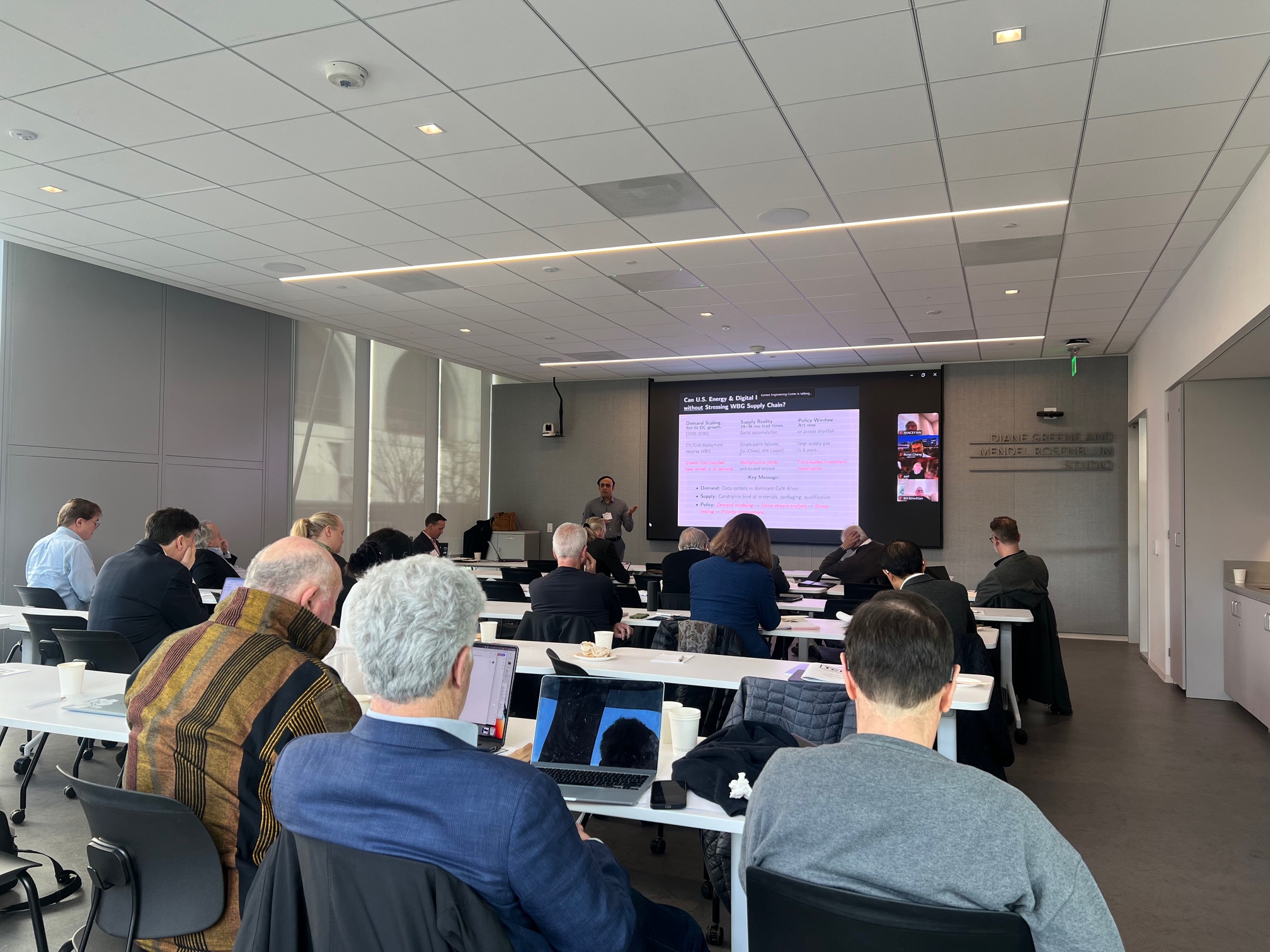
BERKELEY, CA – Six months ago, the Technology Competitiveness and Industrial Policy Center (TCIP) gathered in Santa Cruz to ask the big questions: How does the U.S. regain its lead in critical technologies? On January 23, the group reconvened at UC Berkeley’s Grimes Engineering Center not just to ask questions, but to start presenting answers.
The day marked a clear shift from the exploration of last summer to the presentation of concrete strategies. Leading academic minds, industry veterans, and policy experts spent the day unpacking six major studies and hearing from visionary speakers on everything from “microfactories” to the future of robotics.
The morning sessions focused on the critical hardware that powers the modern world – batteries, vehicles, and semiconductors.
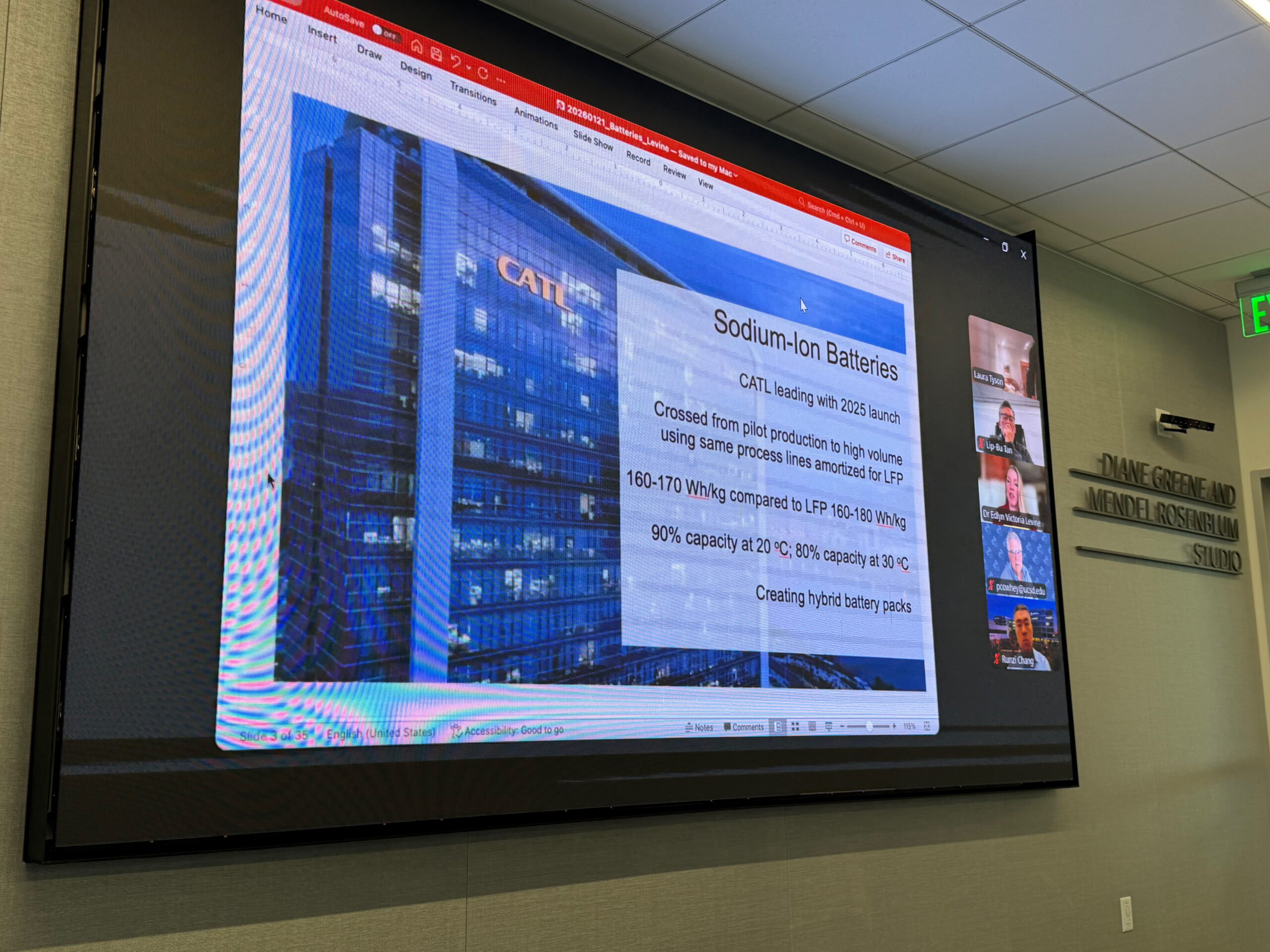
- Technology Leadership in Rechargeable Electrochemical Batteries: Edlyn Levine (MIT) kicked off the day with a stark reality check: you can’t lead in battery technology if you don’t lead in making them. Her study, Technology Leadership in Rechargeable Electrochemical Batteries, argues that “learning by doing” is essential. We can’t just invent new chemistries in a lab; we must master the factory floor, or we risk ceding the future of energy storage to competitors who are already building at massive scale.
- Global Shift Toward EVs and Challenges to American Competitiveness: John Zysman (UC Berkeley) framed the transition to electric vehicles (EVs) not just as a car issue, but as a national security one. His study describes the auto sector as the “industry of industries.” If the U.S. falls behind in EVs, we lose the demand signal for the batteries, software, and advanced tooling that underpin the entire economy.
- Semiconductor Manufacturing Ecosystems: Moving to semiconductors, H.-S. Philip Wong (Stanford) presented a deep dive into semiconductor manufacturing ecosystems. His team analyzed what it really takes to build chips. It’s not just about erecting a fab. It’s about the surrounding ecosystem of suppliers, tradespeople, technicians, and engineers. The study compares U.S. efforts to global leaders, identifying exactly where our local supply chains need to be strengthened to make these new factories succeed.
- Scaling Wide-Bandgap Technologies for Energy, Transportation, and Digital Infrastructure: Saurabh Amin (MIT) shone a light on a critical but often overlooked technology: wide-bandgap semiconductors. These are the specialized chips needed for high-power tasks like charging EVs and running data centers. His study warns of a looming supply gap and highlights vulnerabilities, such as China’s control over essential materials like Gallium. The message was clear: we have a narrow window to secure the supply chain for such chips of the future.
The afternoon turned to the ultimate challenge: clean, reliable energy.
- Strategic Pathways for Next-Generation Nuclear Deployment: Per Peterson (UC Berkeley) discussed the challenges and opportunities in shifting from massive, custom-built power plants to Small Modular Reactors (SMRs) that can be factory-built and deployed where needed. The study outlines the regulatory and industrial hurdles we need to clear to make this new nuclear a reality.
- Governing the Future of Nuclear Fusion: Following the historic ignition fusion breakthrough, Andrew Reddie (UC Berkeley) addressed how the science is working, but the business model is still being written. His team is developing frameworks to manage the race to commercialization, ensuring that when fusion power plants finally arrive, the U.S. is the one selling the technology, not just buying it.
Along with the studies, three keynote talks offered fresh perspectives on the bigger picture.
- YIMBY: Bringing Biomanufacturing to Cambridge, MA (…or Better Still, Everywhere): In a lunch keynote, J. Christopher Love (MIT) asked: Why does making medicine require a billion-dollar factory? He proposed a radical shift to microfactories – small, automated units that look more like server farms than chemical plants. This “YIMBY” (Yes In My Backyard) approach could allow us to produce vaccines and treatments locally and on-demand, breaking the bottlenecks of the current system.
- Starting and Growing Robotics Companies: Rodney Brooks (MIT) gave a candid talk about his experiences translating research to products and building companies along the way. He distinguished the reality of physical robots from the hype of software AI, sharing lessons on what it takes to deploy machines that work in the physical world.
- Intellectual Frameworks (and Models) Required to Address Industrial Strategy/Policy Issues: David Teece (UC Berkeley) provided the intellectual backbone for the day, discussing industrial policy frameworks. His key point: innovation alone isn’t enough. If we invent it here but can’t make it here, the economic value, and the jobs, will go somewhere else.
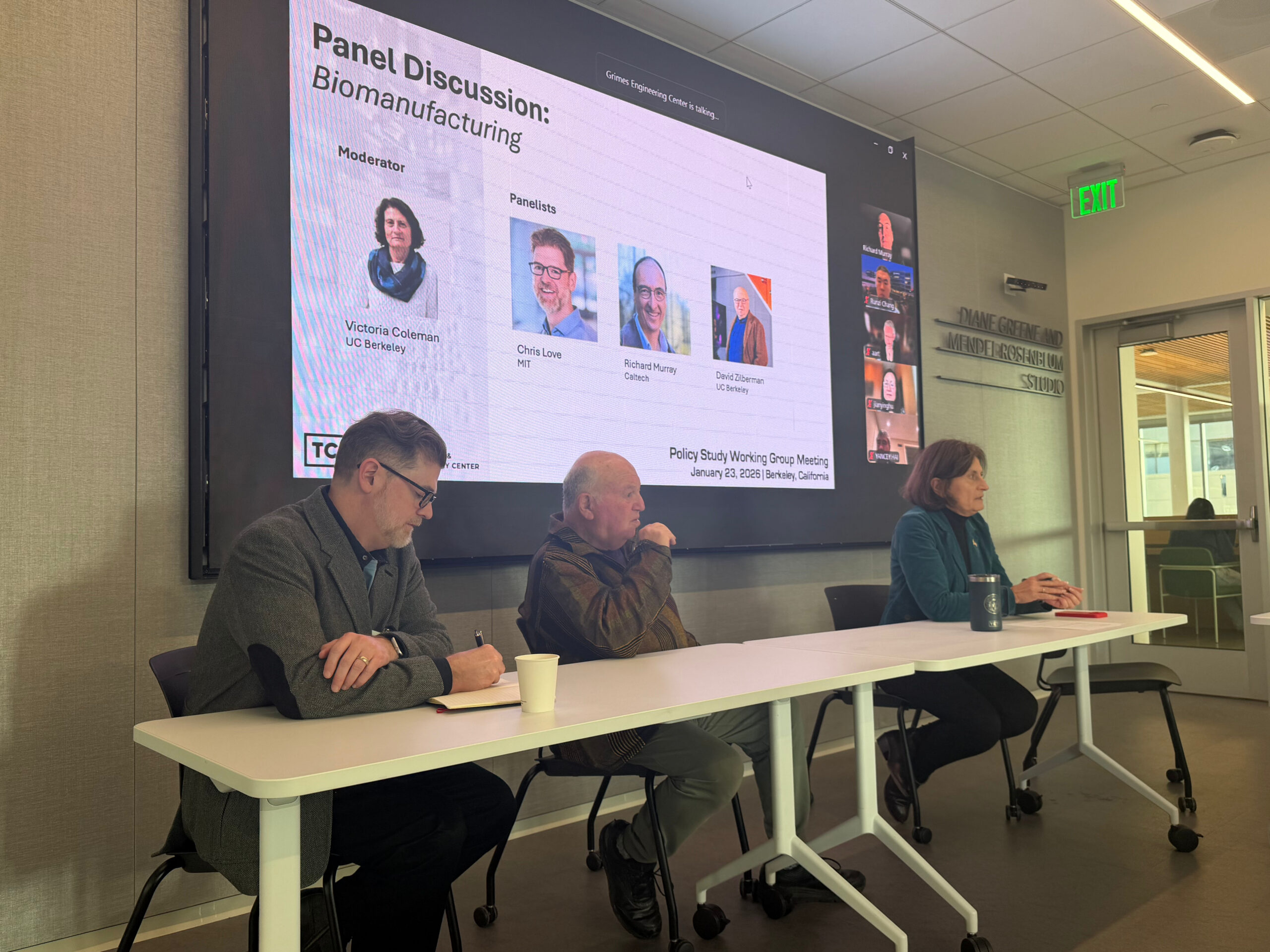
The afternoon also included a series of moderate panel discussions with participants from the California Institute of Technology, Lawrence Berkeley National Laboratory, Stanford University, and UC Berkeley. Topics included the economic hurdles of scaling synthetic biology, the intersection of AI and high-throughput experimentation in materials discovery, and strategies for developing a workforce capable of sustaining a resurgent U.S. manufacturing sector.
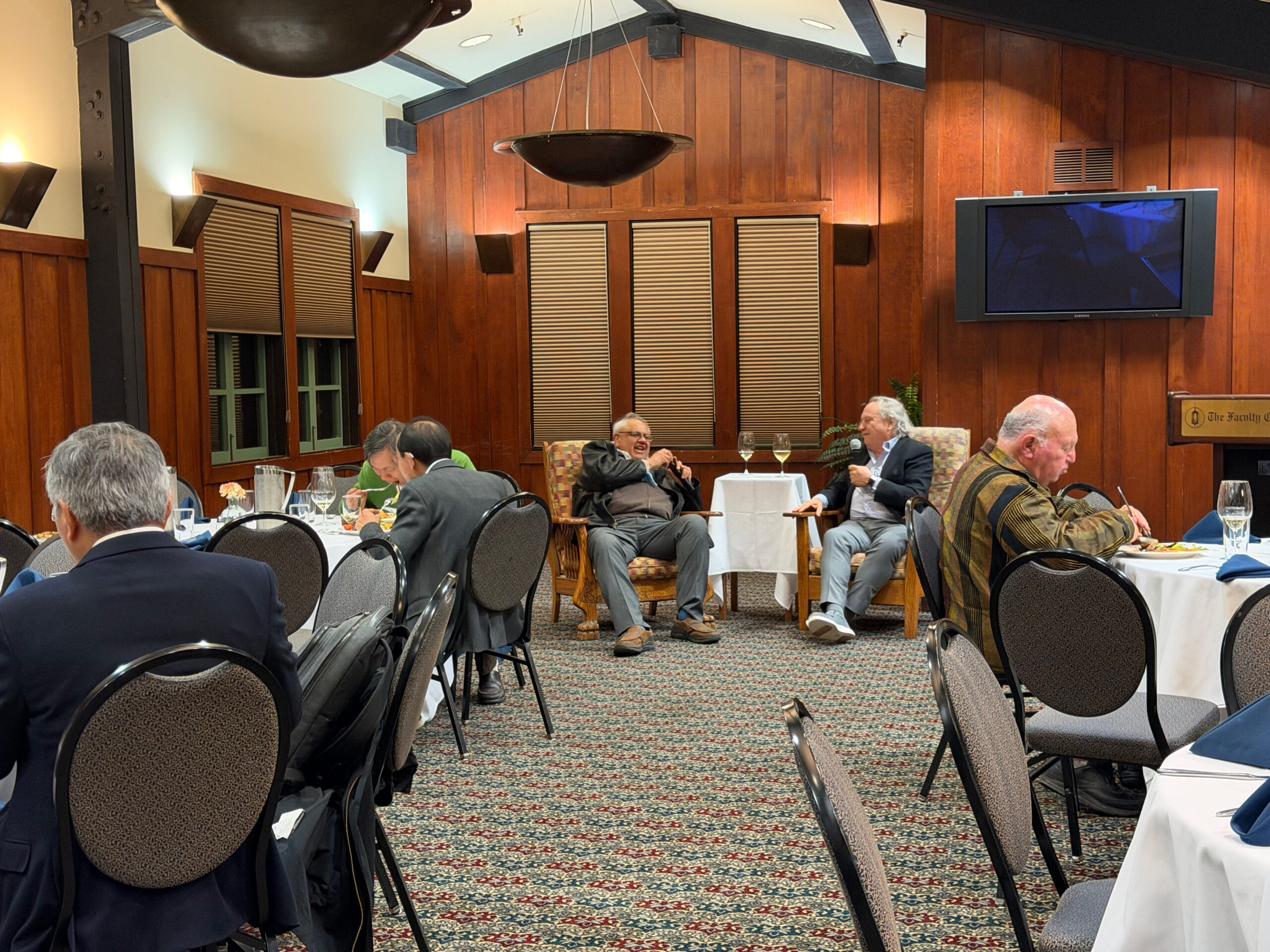
The day concluded with a reception and dinner at The Faculty Club, featuring an intimate fireside chat between UC Berkeley Professor and TCIP Director Shankar Sastry and Rodney Brooks. Moving beyond the commercial focus of the earlier sessions, the evening discussion explored the technical and societal frontiers of robotics and physical artificial intelligence.
Reflecting on the six months since the Center’s initial retreat, the day’s discussions revealed a clear evolution from exploratory questions to the start of creating concrete policy frameworks. A central theme emerged around the critical bond between “inventing” and “making” – the consensus that the U.S. cannot maintain technology leadership without a robust, domestic manufacturing base to sustain it. Across the diverse topics of the day, participants emphasized the need for new, distributed models of production and the urgent drive to build a workforce skilled enough to support these advanced technologies.
The Technology Competitiveness and Industrial Policy Center (TCIP), founded in February 2025 at the University of California, Berkeley by industry leader and former TSMC Executive Chairman Mark Liu, aims to develop a new vision for advanced technology development and production in the U.S. through academic research, industrial capabilities, and regulatory policy study and recommendations. For more information, see TCIP.org and follow @TCIPcenter on social media.