
Technology Competitiveness Policy Studies
TCIP Center has commissioned experts and researchers in technology, business, and public policy to produce cogent and timely policy reports.
These reports aim to provide trusted independent scholarly advice to policy makers and lawmakers regarding technology policy development to ensure leadership in technology, R&D and advanced manufacturing for economic prosperity, national security, and societal well-being.

American Production in a Fractured Global Economy
Pinpointing the industrial policies necessary to translate technological strengths into competitiveness.
Study Summary: Over the last several decades America’s technology leadership has faced three interrelated challenges. First, the rise of China as a competitor in both the development and production of a growing number of critical technologies. Second, the simultaneous weakening of the U.S. innovation eco-system because of significant cuts in federal support for science and research, and the significant investment by China in its own research and innovation eco-system. And third, the decoupling or disconnect between U.S. research and technological leadership and the nation’s ability to scale technological breakthroughs and secure competitive and commercial production in them. The overarching question for policymakers is why has this happened and what can be done? This study targets the institutions and policies necessary to translate our technological strengths into the competitiveness of the U.S. as a production location for both U.S. and foreign companies, and to assure that we maintain those strengths.
Study Leads:
Laura Tyson, University of California, Berkeley
John Zysman, University of California, Berkeley
Study Participants:
Susan Helper, Case Western University
Alberto L. Sangiovanni-Vincentelli, University of California, Berkeley
Anna Waldman Brown, Berkeley Roundtable on the International Economy
Mark Nitzberg, University of California, Berkeley
Martin Kenney, University of California, Davis

From Lab to Market: Mapping Quantum Technology Supply Chain Risks and Opportunities
Understanding critical nodes in Quantum Technology supply chains.
Study Summary: As quantum technologies mature from basic laboratory research and prototyping to commercialization and deployment, American leadership in development and diffusion will hinge on securing access to a complex, globally distributed supply chain. Understanding critical nodes in this supply chain and their geographical distribution is therefore essential for U.S. policymakers seeking to bolster quantum innovation in support of broader economic competitiveness and national security objectives. This study will map the quantum technology supply chain, identify critical nodes of vulnerability, and evaluate the effectiveness of current and alternative policy levers, ranging from export controls to procurement incentives and allied coordination. In doing so, it will produce empirically supported, actionable policy recommendations for strengthening supply chain security, mitigating strategic vulnerabilities, and sustaining technological leadership as quantum technologies transition from the lab to commercialization.
Study Lead:
Lindsay Rand, University of California, Berkeley
Production-Linked Innovation and Industrial Policy
Developing a plan to revitalize the U.S. manufacturing capabilities that matter most.
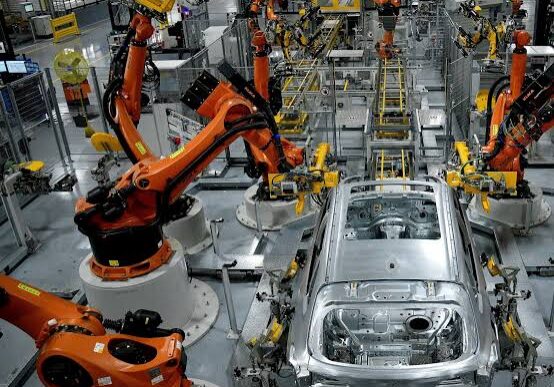
Study Summary: This study seeks to determine which manufacturing capabilities matter most for U.S. technology competitiveness and how the United States can revitalize them through industrial policy. The study separates the distinct claims often made about manufacturing and focuses on manufacturing as a driver of innovation, identifying the specific forms of production capacity, process know-how, supplier depth, workforce capability, and institutional capacity that support technology innovation. The project will employ a data-driven approach integrating sector case studies, comparative analysis of the industrial policies of Taiwan, South Korea, and Japan, and expert interviews with policymakers and private-sector leaders. The final output will be an evidence-based decision framework for policymakers.
Study Lead:
Edlyn Levine, TCIP Center
Study Participant:
Fiona E. Murray, MIT Sloan School of Management

AI for the Public Benefit
Harnessing AI's potential to serve the public good.
Study Summary: This study will develop a holistic National AI Industrial Strategy that prepares the U.S. to turn scientific developments from advances in AI with significant social-benefit potential into real public benefits. It will move beyond other important debates around mitigating AI risks and harms, to instead focus on catalyzing AI benefits. In short, it will identify the most promising areas of AI innovation with significant potential for positive social impacts, map the steps to take those innovations from the lab to the public, and propose a policy toolkit to streamline that process and build public capacity to deliver. In so doing, this study will speak directly to “another [AI] policy conversation that is strangely absent,” according to a recent column by Ezra Klein of the New York Times, recognizing that, as he put it, “[i]f we want an A.I. that serves the public good, we need to define the public goods that A.I. can serve and create the conditions under which A.I. can be useful.”
Study Leads:
Asad Ramzanali, Vanderbilt Policy Accelerator
Joel Dodge, Vanderbilt Policy Accelerator
Study Participant:
Ganesh Sitaraman, Vanderbilt Law School

Incentivizing Biomanufacturing as a Hedge Against Shocks to U.S. Chemical and Agricultural Supply Chains
Building resilient chemical and agricultural supply chains with biomanufacturing.
Study Summary: This study seeks to understand how bioindustrial manufacturing can bridge surplus U.S. agricultural feedstocks and demand for critical chemicals. The study will map the material flows of U.S. agricultural feedstocks, identify and prioritize critical imported chemicals using trade data, assess the potential to biomanufacture those chemicals, and develop policy recommendations for generating regular information on agricultural material flows, critical chemicals, and biomanufacturing production support. The project will employ a mixed-methods approach combining quantitative analysis of trade flows, biomass supplies, and material process flows with document analysis and supplemental expert interviews.
Study Lead:
Douglas Friedman, BioMADE
Study Participant:
Galen Dods, BioMADE

The Reallocation Advantage: How U.S. Labor Market Dynamism Powers the Development and Diffusion of Frontier Technology--and the AI Race with China
Analyzing how labor market dynamism contributes to U.S. technology leadership.
Study Summary: The United States leads the world in disruptive, frontier technology—and the central competitiveness question of this decade is whether it can sustain that lead in artificial intelligence against a fast-rising China. A primary source of U.S. technology leadership is the set of labor-market institutions that let the United States both develop frontier technology and diffuse it through the economy faster than its rivals. The United States’ comparative institutional advantage lies in institutions that permit faster reallocation, and thus more creative destruction, than its rivals’. Yet U.S. business and labor-market dynamism have themselves declined for decades, at measurable cost to productivity growth. Artificial intelligence is the leading case, and it raises the stakes. This study aims to establish labor-market dynamism as a measurable industrial-policy asset for U.S. technology competitiveness, use AI adoption as the central case study and application, and deliver concrete, U.S.-grounded policy recommendations for sustaining the reallocation advantage at acceptable social cost. The study examines how the United States can cushion the human costs of reallocation without importing the rigidities that have stalled European frontier performance, and how it can strike a competitive balance between the productivity gains of reallocation and its social cost.
Study Lead:
Benjamin Schoefer, University of California, Berkeley
Technology Leadership in Rechargeable Electrochemical Batteries
Exploring industrial policies to achieve leadership in rechargeable battery technology research and development and advanced manufacturing for economic prosperity, national security, and social benefit.
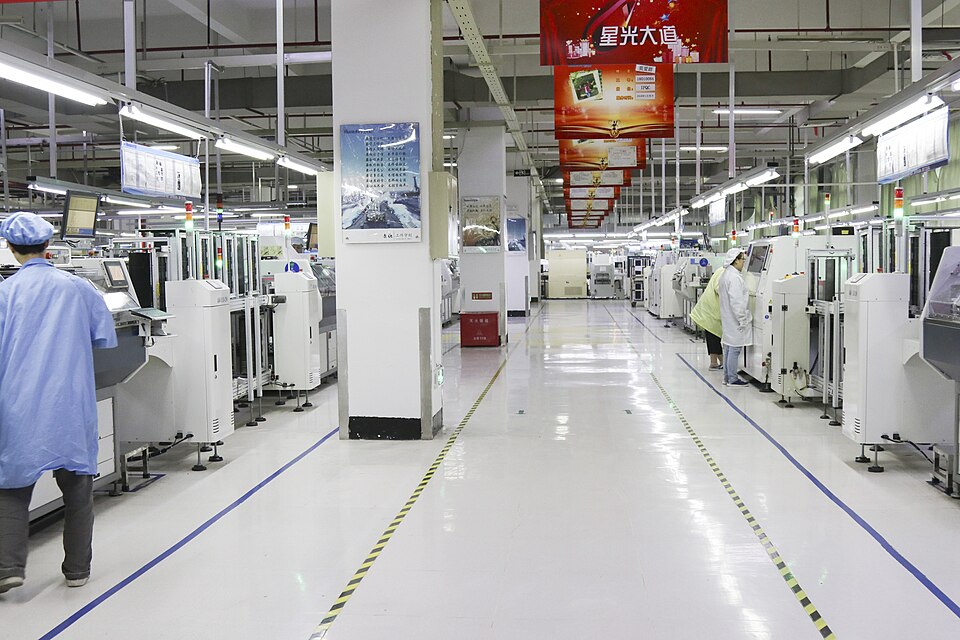
Study Summary: As a deeply research-intensive industry, batteries incorporate technical advances in product and manufacturing process technology alike. Technology leadership must therefore incorporate the ability to both develop next generation battery chemistries and prototypes as well as the ability to ramp the advanced manufacturing methods that enable economically competitive scaling to high volume production. Research and manufacturing are intimately linked in the battery industry. Ultimately, a country that leads in manufacturing will also likely advance the in next generation chemical energy storage breakthroughs due to domestic expertise of industrialized chemistry and materials processing.
Study Leads:
Edlyn Levine, Harvard University and MIT Sloan School of Management
Study Participants:
Yet-Ming Chiang, Massachusetts Institute of Technology
Erica Fuchs, Carnegie Mellon University
Jeremy Michalek, Carnegie Mellon University
Fiona E. Murray, MIT Sloan School of Management
Semiconductor Manufacturing Ecosystems
Understanding the role of ecosystems for advanced semiconductor manufacturing in the U.S., including the current state of the ecosystem in Arizona, a study of other U.S. ecosystems, and a comparison with ecosystems in other countries.
Study Summary: It is widely recognized that technology development is the engine for economic growth and that semiconductors, in particular, are foundational to all technology industries — from self-driving cars, new AI models, to GPS satellites – and will fuel technology competitiveness and economic strength. Additionally, semiconductors are critical to the development and operation of national security assets – from weapons systems to cyber-security – that rely on both legacy and leading-edge semiconductors. While there is strong bipartisan consensus in the United States that microelectronics are a critical technology that will underlie technological competitiveness in the coming decades and that U.S. leads the world in many parts of the semiconductor value chain (e.g., chip design, semiconductor equipment, EDA), the U.S. currently lags behind Taiwan and Korea in the production of leading-edge semiconductor technologies. This study aims to understand the role of ecosystems for a thriving advanced technology production industry (manufacturing), focusing on ecosystem for semiconductor manufacturing in the U.S. by studying the current state of ecosystem in Arizona (collecting information on what has been done, what works well, what does not work well, and the reasons why) and more broadly conduct a comparative study with ecosystems outside of the U.S., such as Japan, Korea, Taiwan, mainland China, and Singapore.
Study Lead:
H.-S. Phillip Wong, Stanford University
Study Participants:
William Cao, TCIP Center
Christophe Combemale, Carnegie Mellon University
Lee Fleming, University of California, Berkeley
Hassan Khan, Consultant
Sophia Kim, Stanford University
Wilson Martinez Díaz, Carnegie Mellon University
Jillian Sun, TCIP Center
Jennifer Toy, Stanford University
Scaling Wide-Bandgap Technologies for Energy, Transportation, and Digital Infrastructure
Analyzing causal and policy factors shaping U.S. WBG semiconductor competitiveness, focusing on scaling up essential technologies production to meet rapidly escalating demand in energy, transportation, and digital infrastructure.
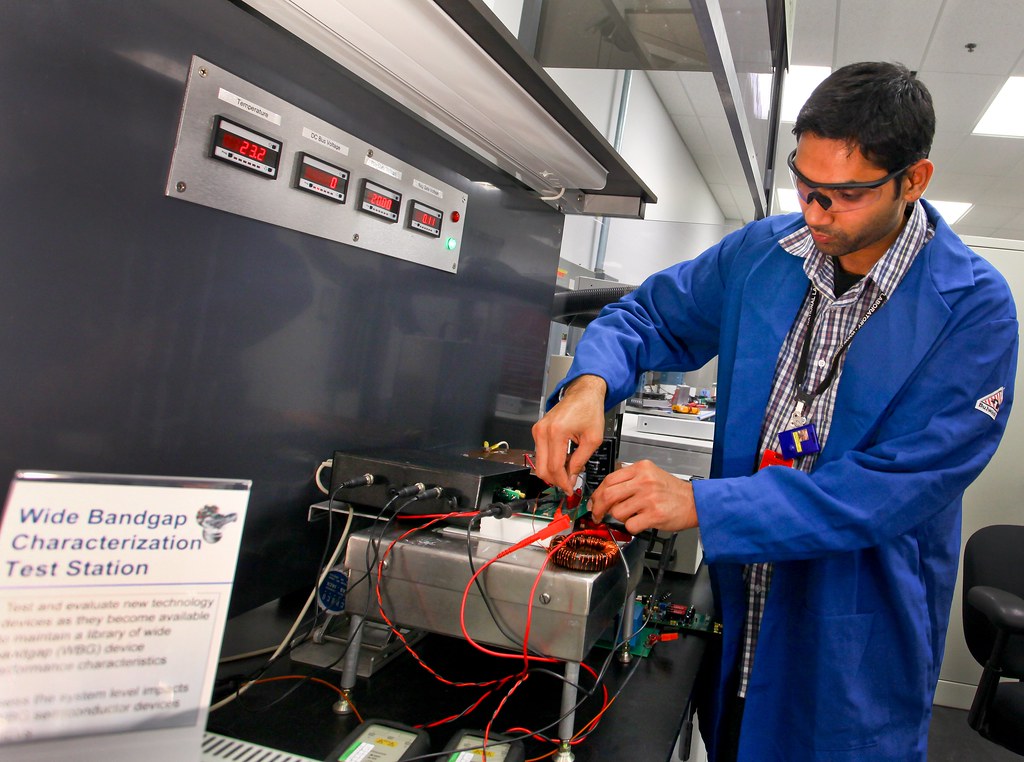
Study Summary: This study aims to provide a causal, networked, and policy-relevant analysis of the U.S. wide-bandgap (WBG) semiconductor ecosystem. The research will identify ecosystem bottlenecks and policy levers across the full materials-to-manufacturing-to-infrastructure deployment pathway, with a focus on supporting national competitiveness in transportation, energy, and digital infrastructure sectors. The study will (1) Map critical causal linkages between research innovation, manufacturing scale-up, supply chain vulnerabilities, and infrastructure deployment for SiC and GaN technologies; (2) Assess how industrial policy tools — including workforce development programs, tax incentives, trade policies, and sustainability regulations — can strengthen U.S. leadership in WBG semiconductors; (3) Quantify the sustainability and resilience impacts of manufacturing pathways, including the carbon footprint of SiC and GaN device production; and (4) Generate evidence-based, actionable policy recommendations to inform strategic investment and industrial policy design.
Study Lead:
Saurabh Amin, Massachusetts Institute of Technology
Study Participants:
Karl Berggren, Massachusetts Institute of Technology
Duane Boning, Massachusetts Institute of Technology
Asu Ozdaglar, Massachusetts Institute of Technology
Tomas Palacios, Massachusetts Institute of Technology
Rajeev Ram, Massachusetts Institute of Technology
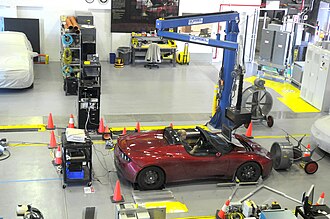
Global Shift Toward EVs and Challenges to American Competitiveness
Examining the global shift toward electric vehicles, the resulting challenge to American competitiveness in this sector, and what it would take to develop a vibrant American EV industry.
Study Summary: The auto industry has historically served as the bedrock of American manufacturing, as a driver of innovation, good jobs, and a multi-tier supply chain that benefits a wide variety of industries. It has also long been a driver of innovation, including the first adoption of moving assembly lines; robotics; computer-aided design, machining, and manufacturing; and mass-produced electronics. Electric vehicles could play a similar role in advancing widespread adoption of today’s breakthrough technologies, such as advanced batteries, semiconductors, and artificial intelligence for manufacturing, navigation, and control. This study will address the global shift toward electric vehicles and the resulting challenge to American competitiveness in this sector. The research will examine what it would take to develop a vibrant American EV industry by (1) investigating both supply- and demand-side factors; (2) analyzing the current supplier base, investigating both its capabilities in traditional but still foundational technologies such as machining, welding, and tooling and the potential for upgrading with sensors, AI and other smart manufacturing techniques; and (3) investigating the potential for development of new capabilities in areas such batteries, semiconductors, and software.
Study Lead:
John Zysman, University of California, Berkeley
Study Participants:
Anna Duffy, Molecule Ventures and Groundwork Collective
Susan Helper, Case Western Reserve University
Laura Tyson, University of California, Berkeley

Governing the Future of Nuclear Fusion
Building supportive pipelines and frameworks to transition landmark breakthroughs and rapid innovation in fusion energy to commercial viability.
Study Summary: As fusion technology moves from laboratory demonstration to prototyping and deployment, the policy community faces an inflection point. The most likely fuel candidate for fusion is deuterium-tritium (DT), although other fuel choices may be possible. Policymakers must now grapple with how to support innovation responsibly, update regulatory and nonproliferation frameworks, ensure robust international collaboration, and anticipate long-term implications for global energy markets and security dynamics. Unlike fission, fusion does not inherently carry the same proliferation risks, but it intersects with dual-use technologies, requires large-scale tritium handling, and could generate geopolitical realignments if widely deployed. This study aims to provide a strategic policy roadmap for engaging with fusion across the entire innovation-to-deployment lifecycle.
Study Leads:
Andrew Reddie, University of California, Berkeley
Ellie Tubman, University of California, Berkeley
Dan Brunner, FutureTech Partners
Study Participants:
Bethany Goldblum, University of California, Berkeley
Jake Hecla, Massachusetts Institute of Technology
Lee Bernstein, University of California, Berkeley
Anne Marie Ritsaar, Lawrence Livermore National Laboratory
Clement Goyon, Lawrence Livermore National Laboratory
TD MacDonald, Lawrence Berkeley National Laboratory
Scott Hsu, Lowercarbon Capital

Strategic Pathways for Next-Generation Nuclear Deployment
Exploring key barriers and opportunities around the development and deployment of next-gen nuclear energy, including small modular reactors and advanced reactors, to deliver safe, scalable, low-carbon energy.
Study Summary: This study explores the key barriers and opportunities associated with the development and deployment of next-generation nuclear energy: Technical, Regulatory, and Government. On the technical front, sustained investment in R&D is essential to overcome outstanding challenges related to reactor design, fuel cycles, cost reduction, supply chain development, and integration with other energy systems. Regulatory frameworks must also evolve to ensure that safety, security, and environmental protection standards are upheld without unduly stifling innovation. Finally, the role of government engagement at the state, local, and federal levels is critical to establish consistent regulatory policy, support demonstration projects, fund foundational R&D via institutions, including the national laboratories, and facilitate public-private partnerships. This study is designed to provide a roadmap for overcoming these challenges, identifying policy, technical, and governance strategies needed to ensure that next-generation nuclear technologies can meaningfully contribute to a resilient, affordable, and sustainable energy future.
Study Leads:
Per Peterson, University of California, Berkeley
Andrew Reddie, University of California, Berkeley
Study Participants:
Peter Hastings, The Hastings Group
Jake Hecla, Massachusetts Institute of Technology
Laura Holgate, Nuclear Threat Initiative
Janet Napolitano, University of California, Berkeley
Jesse Sloane, Deep Isolation
Chris Stanek, Los Alamos National Laboratory
Pranay Vaddi, Massachusetts Institute of Technology