
Semiconductor Manufacturing Ecosystems
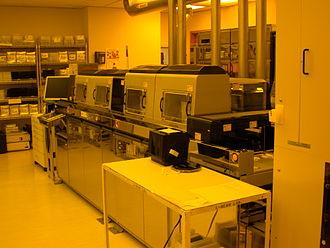
Understanding the role of ecosystems for advanced semiconductor manufacturing in the U.S., including the current state of the ecosystem in Arizona, a study of other U.S. ecosystems, and a comparison with ecosystems in other countries.
Study Summary: It is widely recognized that technology development is the engine for economic growth and that semiconductors, in particular, are foundational to all technology industries — from self-driving cars, new AI models, to GPS satellites – and will fuel technology competitiveness and economic strength. Additionally, semiconductors are critical to the development and operation of national security assets – from weapons systems to cyber-security – that rely on both legacy and leading-edge semiconductors. While there is strong bipartisan consensus in the United States that microelectronics are a critical technology that will underlie technological competitiveness in the coming decades and that US leads the world in many parts of the semiconductor value chain (e.g., chip design, semiconductor equipment, EDA), the US currently lags behind Taiwan and Korea in the production of leading-edge semiconductor technologies. This study aims to understand the role of ecosystems for a thriving advanced technology production industry (manufacturing), focusing on ecosystem for semiconductor manufacturing in the US by studying the current state of ecosystem in Arizona (collecting information on what has been done, what works well, what does not work well, and the reasons why) and more broadly conduct a comparative study with ecosystems outside of the US, such as Japan, Korea, Taiwan, mainland China, and Singapore.
Study Leads:
H.-S. Phillip Wong, Stanford University
Study Participants:
William Cao, TCIP Center
Christophe Combemale, Carnegie Mellon University
Lee Fleming, University of California, Berkeley
Hassan Khan, Consultant
Sophia Kim, Stanford University
Wilson Martinez Díaz, Carnegie Mellon University
Jillian Sun, TCIP Center
Jennifer Toy, Stanford University
Study Report:
The study report is forthcoming.
Study Models:
Download the Semiconductor Economics and Comparative Operations (SECO) Model and Calibration Cases here.