
Board
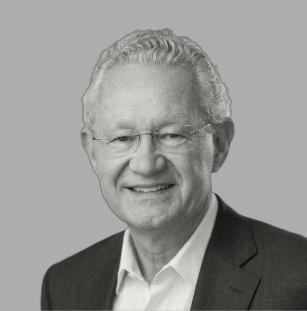
Aart De Geus
Co-Founder and Executive Chair, Synopsys Inc.
Aart de Geus is a semiconductor industry pioneer of Electronic Design Automation (EDA), which provides the software tools and IP blocks central to designing digital chips. Synopsys, which Aart founded in 1986, initially developed and broadly commercialized logic synthesis which automates the creation of digital designs from language descriptions.
This capability transitioned Computer-Aided Design (CAD) into the EDA era by enabling decades of enormous, digital complexity scaling, often referred to as Moore’s Law. Over the ensuing decades of his career at Synopsys, Aart expanded its product offering and market position with unrelenting investments in state-of-the-art R&D and approximately 120 acquisitions. Over the years, Synopsys became the industry leader in EDA and a cornerstone ecosystem company used on virtually every advanced digital chip in the world. While holding many positions in the start-up years of the company, Aart served as CEO from 1994 to 2024. Aart is a legendary speaker, widely recognized for using visual storytelling to blend technology trends, with the history of semiconductor design, and the shift to systemic complexity, invariably culminating into a motivating vision of an innovative high-tech future.
For his pioneering work, industry impact, and community service, Aart has received numerous honors, including Electronic Business Magazine’s “CEO of the Year” (2002) and “Top 10 Most Influential Executives” (2005), the IEEE Robert N. Noyce Medal (2007), the Silicon Valley Leadership Group (SVLG) “Spirit of the Valley” Lifetime Achievement Award (2007), the GSA “Morris Chang Exemplary Leadership Award” (2009), and an honorary PhD from Glasgow University (2022).

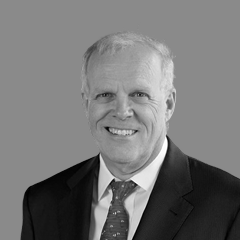
John Hennessey
Co-Founder and Shiram Family Director, Knight-Hennessey Scholars
John L. Hennessy is the Co-Founder and Shriram Family Director of Knight-Hennessy Scholars, the largest fully endowed graduate-level scholarship program in the world. He is Chairman of the Board of Alphabet and serves on the Board of Trustees for the Gordon and Betty Moore Foundation. Formerly the tenth President of Stanford University, he is also a computer scientist who co-founded MIPS Computer Systems and Atheros Communications. He co-won the National Academy of Engineering's Charles Stark Draper Prize for Engineering in 2022; shared the 2017 ACM A.M. Turing Prize with Dave Patterson; and received the 2012 Institute of Electrical and Electronics Engineers Medal of Honor.
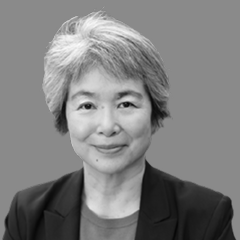
Tsu-Jae King Liu
President, National Academy of Engineering
Tsu-Jae King Liu is the President of the National Academy of Engineering since July 1, 2025. A distinguished engineer and academic leader, she earned her B.S., M.S., and Ph.D. in electrical engineering from Stanford University. In 1996 she joined the faculty of the Department of Electrical Engineering and Computer Sciences at the University of California, Berkeley where she has served in various administrative leadership positions, most recently as Dean of the College of Engineering from July 2018 through June 2025.
Liu is renowned for her contributions in the field of microelectronics, which include co-developing the FinFET transistor design that is used in all leading-edge computer chips and smartphones today. She has authored over 550 publications and holds 97 U.S. patents. Her recognitions include the DARPA Significant Technical Achievement Award and the IEEE Electron Devices Society Education Award.
Liu is a Fellow of the IEEE and the National Academy of Inventors, and was inducted into the U.S. National Academy of Engineering in 2017. She has served on the Boards of Directors for Intel Corporation and MaxLinear Inc., and has contributed nationally as an advocate for U.S. microelectronics workforce development and as a member of advisory committees for NSF, NIST, and PCAST.
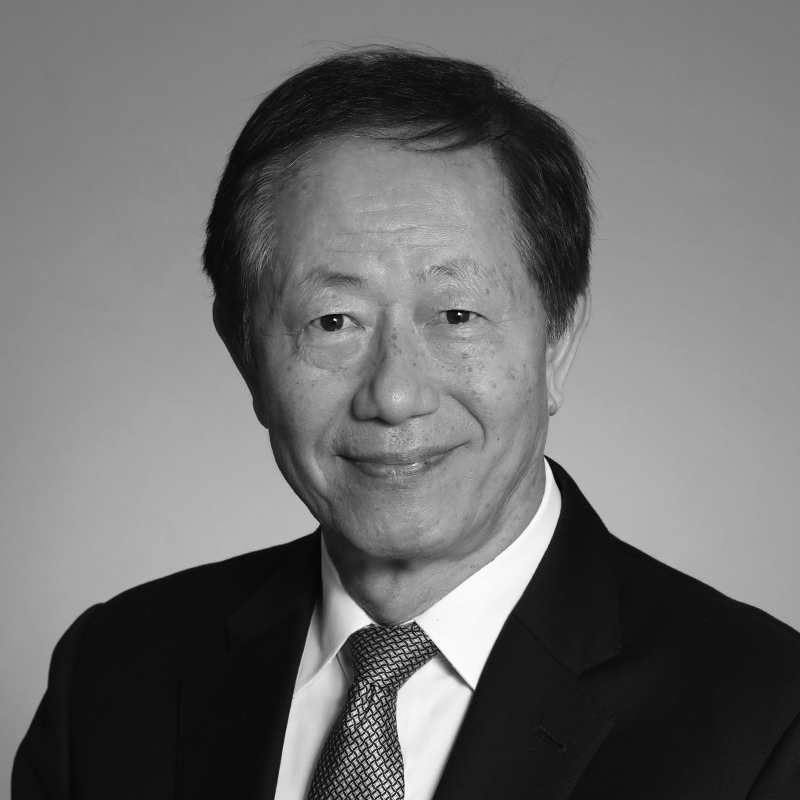
Mark Liu
Founder, TCIP
Dr. Mark Liu is the Chairman of J&M Copper Beech Ventures in Palo Alto, CA and the founder of the Technology Competitiveness and Industrial Policy Center at UC Berkeley. He was also Executive Chairman of TSMC (2018–2024) and under his leadership, TSMC expanded from a Taiwan-centric manufacturer to a global enterprise, growing its presence in the United States, Japan and Germany.
Prior to serving as Chairman, Dr. Liu was President and Co-CEO of TSMC (2013–2018), leading the company’s cutting-edge semiconductor technology development and solidifying its position as an industry leader. He was Co-Chief Operating Officer (2012–2013) and previously held several senior leadership positions, including Senior Vice President of Advanced Technology Business and Senior Vice President of Operations, where he established TSMC’s first 12-inch fab and later spearheaded the development of TSMC's GIGAFAB® operations and Digitized Fab operations.
Prior to joining TSMC, Dr. Liu was with AT&T Bell Laboratory as a research manager for the High-Speed Electronics Research Laboratory (1987–1993), working on optical fiber communication systems. Earlier in his career, he was a process integration manager of CMOS technology development at Intel Corporation (1983–1987), developing silicon process technologies for microprocessors.
Beyond TSMC, Dr. Liu has been a key figure in the semiconductor industry. He served as Chairman of the Taiwan Semiconductor Industry Association (2019–2023) and twice chaired the World Semiconductor Council (2020, 2022). He currently serves on the Board of Trustees of the U.C. Berkeley Foundation, the Engineering Advisory Board of the UC Berkeley College of Engineering and the Board of Directors at Micron Technology.
Dr. Liu holds a B.S. in Electrical Engineering from National Taiwan University and M.S. and Ph.D. degrees in Electrical Engineering and Computer Science from the University of California, Berkeley.
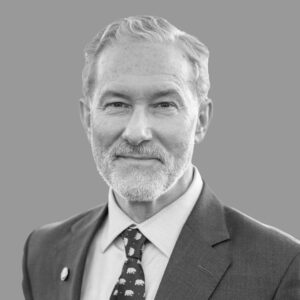
Richard Lyons
Chancellor, University of California, Berkeley
Rich Lyons is the 12th Chancellor of the University of California, Berkeley, and the first undergraduate alum to serve in this role, having earned his BS in Economics from Berkeley in 1982. With decades of leadership and scholarly experience, Rich brings extensive expertise in academic innovation, institutional culture building, and public higher education advocacy.
Previously, he served as Dean of Berkeley’s Haas School of Business and later led the campuswide development of innovation and entrepreneurship initiatives, helping position Berkeley as a global leader in venture-funded startups and civic enterprise creation. Before returning to Berkeley, Rich was a faculty member at Columbia University after completing his PhD in Economics at MIT.
Rich’s research focuses on information aggregation in societies and its expression through price signals, particularly in international exchange rates. His influential book, The Microstructure Approach to Exchange Rates, helped define the field. A recipient of Berkeley’s Distinguished Teaching Award, Rich is a strong advocate for educational excellence, accessibility, and cultivating a sense of stewardship among students and alumni.
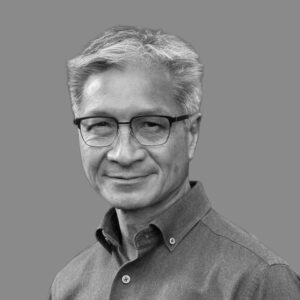
Victor Peng
CEO, PsiQuantum
Victor Peng has over 40 years of experience defining and delivering leadership products including adaptive SoCs, FPGAs, GPUs and high-performance CPUs. He currently serves on the boards of KLA Corporation and Microchip Technologies and serves on the National Semiconductor Technology Center steering committee providing the perspective of the private sector.
Mr. Peng was President at AMD from February 2023 until his retirement from AMD in August 2024. He was responsible for the Embedded and Data Center GPU businesses, Advanced Research and the company’s AI strategy including the AI hardware and software roadmaps. Mr. Peng rejoined AMD in February 2022 after 14 years at Xilinx, Inc. most recently serving as CEO and member of the Board of Directors. Prior to joining Xilinx, Mr. Peng worked at AMD as Corporate Vice President of Silicon Engineering for the Graphics Products Group, and before that he held executive and engineering leadership roles at MIPS Technologies, SGI, and Digital Equipment Corp.
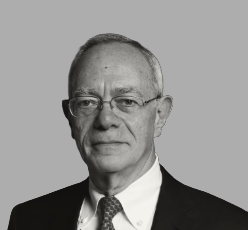
Rafael Reif
Former President, MIT
L. Rafael Reif served as the seventeenth president of the Massachusetts Institute of Technology (MIT) from 2012 to 2022. In education, his central focus was the development of online learning. During his tenure, MIT rapidly adopted blended learning models in its own classrooms, expanded educational access for learners around the globe with MITx and edX, and created new forms of credentialing such as the MicroMasters. Dr. Reif also made it a priority to equip the next generation of MIT innovators with the tools to drive their ideas to impact, including by launching The Engine, a venture firm for breakthrough inventions that address humanity’s great challenges.
In 2018, Dr. Reif launched the MIT Quest for Intelligence to advance research in both human and machine intelligence and the MIT Task Force on the Work of the Future to consider the societal impacts of automation. Later that year, Dr. Reif announced the MIT Schwarzman College of Computing, the most significant reshaping of the institute since the 1950s.
In May 2021, Dr. Reif and his leadership team introduced.Fast Forward: MIT’s Climate Action Plan for the Decade, which included MIT’s Climate Grand Challenges and the MIT Climate and Sustainability Consortium to help leading companies pilot and adopt climate solutions.
In 2022, his leadership team released a highly influential report that offered guidelines for academic exchanges with China.
A member of the MIT faculty since 1980 and the inventor or coinventor on thirteen patents, Dr. Reif has served as director of MIT’s Microsystems Technology Laboratories, as head of the Department of Electrical Engineering and Computer Science (EECS), and as provost. He received the degree of Ingeniero Eléctrico from Universidad de Carabobo in Valencia, Venezuela, and a doctorate in Electrical Engineering from Stanford University.
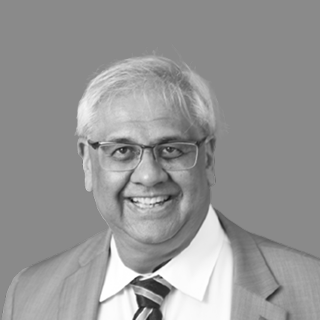
S. Shankar Sastry
Faculty Director, TCIP and Professor of EECS, Bioengineering, and Mechanical Engineering, University of California, Berkeley
Shankar Sastry is the Thomas M. Siebel Professor in Computer Science and holds faculty appointments in the departments of Electrical Engineering and Computer Sciences, Bioengineering, and Mechanical Engineering, all at the University of California, Berkeley. From 2008 to 2018 he was the Dean and Roy W. Carlson Professor of Engineering at Berkeley and from 2004 to 2007 he was the Director of the Center for Information Technology Research in the Interest of Society (CITRIS), an interdisciplinary center spanning UC campuses at Berkeley, Davis, Merced, and Santa Cruz. He has served as Chairman, Berkeley Department of Electrical Engineering and Computer Sciences, Director of the Information Technology Office at DARPA, and Director of the Electronics Research Laboratory at Berkeley. Prior to joining the EECS faculty in 1983, he was a professor at MIT. He received his Ph.D. in 1981 from the University of California, Berkeley.
His areas of research are embedded and autonomous software, computer vision, computation in novel substrates such as quantum computing, nonlinear and adaptive control, robotic telesurgery, control of hybrid and embedded systems, network embedded systems, and software. He has been concerned with cybersecurity and critical infrastructure protection, and helped establish the NSF Science and Technology Center Team for Research in Ubiquitous Secure Technology (TRUST). He has coauthored over 650 technical papers and 10 books and supervised over 65 doctoral students and over 50 MS students to completion.
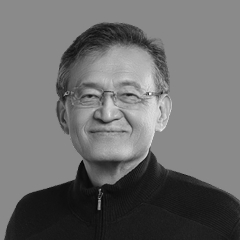
Lip-Bu Tan
CEO, Intel
Eric Lip-Bu Tan is chief executive officer of Intel Corporation and serves on the company’s board of directors. He was appointed to his position in March 2025.
Tan has received several accolades for his significant contributions to the industry, including the 2022 Robert N. Noyce Award, the Semiconductor Industry Association’s highest honor, and was named one of Forbes’ Top 50 Venture Capitalists. Tan previously served as CEO of Cadence Design Systems Inc. and was also a member of its board of directors. During his 12 years as Cadence’s chief executive officer, he led a reinvention of the company and drove a cultural transformation centered on customer-centric innovation that enabled Cadence to more than double its revenue, expand operating margins and significantly outperform the market.
Tan is a founding managing partner of Walden Catalyst Ventures and chairman of Walden International, a leading venture capital firm. He has also served on the boards of public companies Credo Technology Group and Schneider Electric. Tan holds a Bachelor of Science in physics from Nanyang Technological University in Singapore, a Master of Science in nuclear engineering from the Massachusetts Institute of Technology and an MBA from the University of San Francisco. He was also awarded an Honorary Doctorate in Science and Technology from Carnegie Mellon University in 2025.
His areas of research are embedded and autonomous software, computer vision, computation in novel substrates such as quantum computing, nonlinear and adaptive control, robotic telesurgery, control of hybrid and embedded systems, network embedded systems, and software. He has been concerned with cybersecurity and critical infrastructure protection, and helped establish the NSF Science and Technology Center Team for Research in Ubiquitous Secure Technology (TRUST). He has coauthored over 650 technical papers and 10 books and supervised over 65 doctoral students and over 50 MS students to completion.
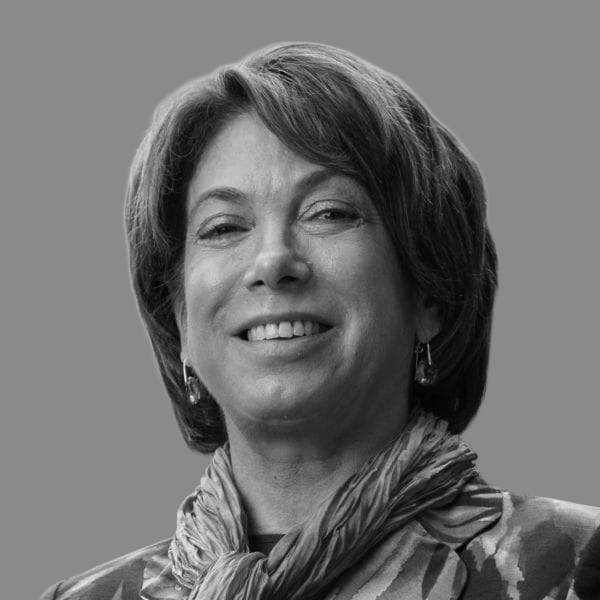
Laura Tyson
Distinguished Professor, Haas School of Business, University of California, Berkeley
Laura D’Andrea Tyson is an influential scholar of economics and public policy and an expert on trade and competitiveness who has also served as a presidential adviser. She is a Distinguished Professor of the Graduate School at the Haas School of Business, University of California, Berkeley. She chairs the Board of Trustees at UC Berkeley’s Blum Center for Developing Economies, which aims to develop solutions to global poverty.
Dr. Tyson is the former Faculty Director of the Berkeley Haas Institute for Business and Social Impact, which she launched in 2013. She served as Interim Dean of the Haas School from July to December 2018, and previously as Dean from 1998 to 2001. Dr. Tyson also held the position of Dean at London Business School from 2002 to 2006. She currently serves as a senior advisor to the Sustainable and Impact Finance Initiative at Berkeley Haas.
Dr. Tyson served as the sixteenth Chair of the White House Council of Economic Advisers (1993 – 1995), the first woman to hold that position since the Council’s establishment in 1946. Between March 1995 and December 1996, she was President Clinton’s National Economic Adviser. She was a key architect of the President’s domestic and international economic policy agenda during his first term in office As the Administration’s top economic adviser, Dr. Tyson managed all economic policy-making throughout the executive branch. She also served as a member of the President’s National Security Council and Domestic Policy Council.
From 2009 to 2011, Dr. Tyson served on President Barack Obama’s Economic Recovery Advisory Board. She was a member of the President’s Council on Jobs and Competitiveness from 2011 to 2013. Between 2011 and 2013, she also served on the U.S. Department of State Foreign Affairs Policy Board. From 2016 to 2017, Dr. Tyson served on the President’s Council of Advisors for the Science and Technology Semiconductor Working Group. Most recently, from 2020 to 2021, she was a member of French President Emmanuel Macron’s Commission d’experts sur les grands défis économiques.