
Executive Committee

Mark Asta
Dean and Roy W. Carlson Chair of Engineering, University of California, Berkeley
Dean Mark Asta received his PhD in an interdisciplinary Materials Physics program from the University of California, Berkeley, in 1993. He subsequently joined Sandia National Laboratories at Livermore, CA, as a postdoctoral researcher and then as a senior member of technical staff beginning in 1995. He joined the faculty of the Department of Materials Science and Engineering, Northwestern University, as an Associate Professor in 2000. In 2005 he joined the University of California, Davis, as a full Professor in the Department of Chemical Engineering and Materials Science, where he served as vice-chair from 2008-2009. Asta has held numerous leadership positions, serving as the MSE department chair from 2012–17 and the director of the Materials Science Division at the Lawrence Berkeley National Laboratory (Berkeley Lab) from 2018–22. At Berkeley Lab, he oversaw the expansion of the portfolio of materials research programs funded by the Department of Energy’s Office of Basic Energy Sciences, spanning programs in data-driven materials discovery and materials for microelectronics, quantum information and renewable energy.
Dean Asta has authored or co-authored more than 330 journal publications and sits on numerous boards and panels, including the director’s advisory committee for the Pacific Northwest National Laboratory and the Lawrence Livermore National Laboratory Board of Governor’s Science and Technology Committee. In January 2026, Asta was named the 14th dean of Berkeley Engineering, an appointment he will begin on July 1, 2026, after the end of his one-year term as interim dean.

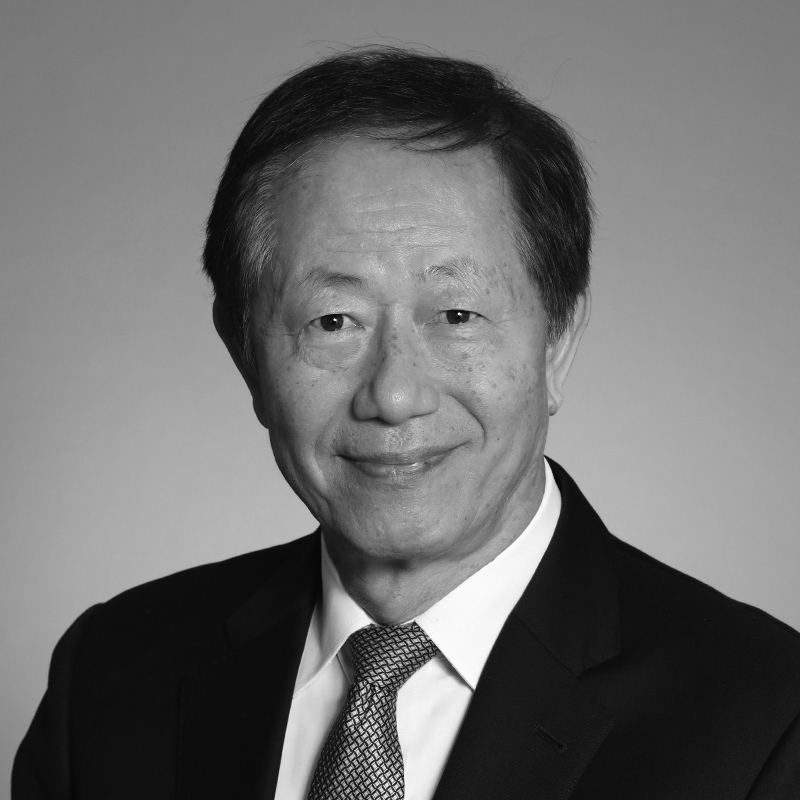
Mark Liu
Founder, TCIP Center
Dr. Mark Liu is the Chairman of J&M Copper Beech Ventures in Palo Alto, CA and the founder of the Technology Competitiveness and Industrial Policy Center at UC Berkeley. He was also Executive Chairman of TSMC (2018–2024) and under his leadership, TSMC expanded from a Taiwan-centric manufacturer to a global enterprise, growing its presence in the United States, Japan and Germany.
Prior to serving as Chairman, Dr. Liu was President and Co-CEO of TSMC (2013–2018), leading the company’s cutting-edge semiconductor technology development and solidifying its position as an industry leader. He was Co-Chief Operating Officer (2012–2013) and previously held several senior leadership positions, including Senior Vice President of Advanced Technology Business and Senior Vice President of Operations, where he established TSMC’s first 12-inch fab and later spearheaded the development of TSMC's GIGAFAB® operations and Digitized Fab operations.
Prior to joining TSMC, Dr. Liu was with AT&T Bell Laboratory as a research manager for the High-Speed Electronics Research Laboratory (1987–1993), working on optical fiber communication systems. Earlier in his career, he was a process integration manager of CMOS technology development at Intel Corporation (1983–1987), developing silicon process technologies for microprocessors.
Beyond TSMC, Dr. Liu has been a key figure in the semiconductor industry. He served as Chairman of the Taiwan Semiconductor Industry Association (2019–2023) and twice chaired the World Semiconductor Council (2020, 2022). He currently serves on the Board of Trustees of the U.C. Berkeley Foundation, the Engineering Advisory Board of the UC Berkeley College of Engineering and the Board of Directors at Micron Technology.
Dr. Liu holds a B.S. in Electrical Engineering from National Taiwan University and M.S. and Ph.D. degrees in Electrical Engineering and Computer Science from the University of California, Berkeley.
Victor Peng
Chief Executive Officer, PsiQuantum
Victor Peng has over 40 years of experience defining and delivering leadership products including adaptive SoCs, FPGAs, GPUs and high-performance CPUs. He currently serves on the boards of KLA Corporation and Microchip Technologies and serves on the National Semiconductor Technology Center steering committee providing the perspective of the private sector.
Mr. Peng was President at AMD from February 2023 until his retirement from AMD in August 2024. He was responsible for the Embedded and Data Center GPU businesses, Advanced Research and the company’s AI strategy including the AI hardware and software roadmaps. Mr. Peng rejoined AMD in February 2022 after 14 years at Xilinx, Inc. most recently serving as CEO and member of the Board of Directors. Prior to joining Xilinx, Mr. Peng worked at AMD as Corporate Vice President of Silicon Engineering for the Graphics Products Group, and before that he held executive and engineering leadership roles at MIPS Technologies, SGI, and Digital Equipment Corp.
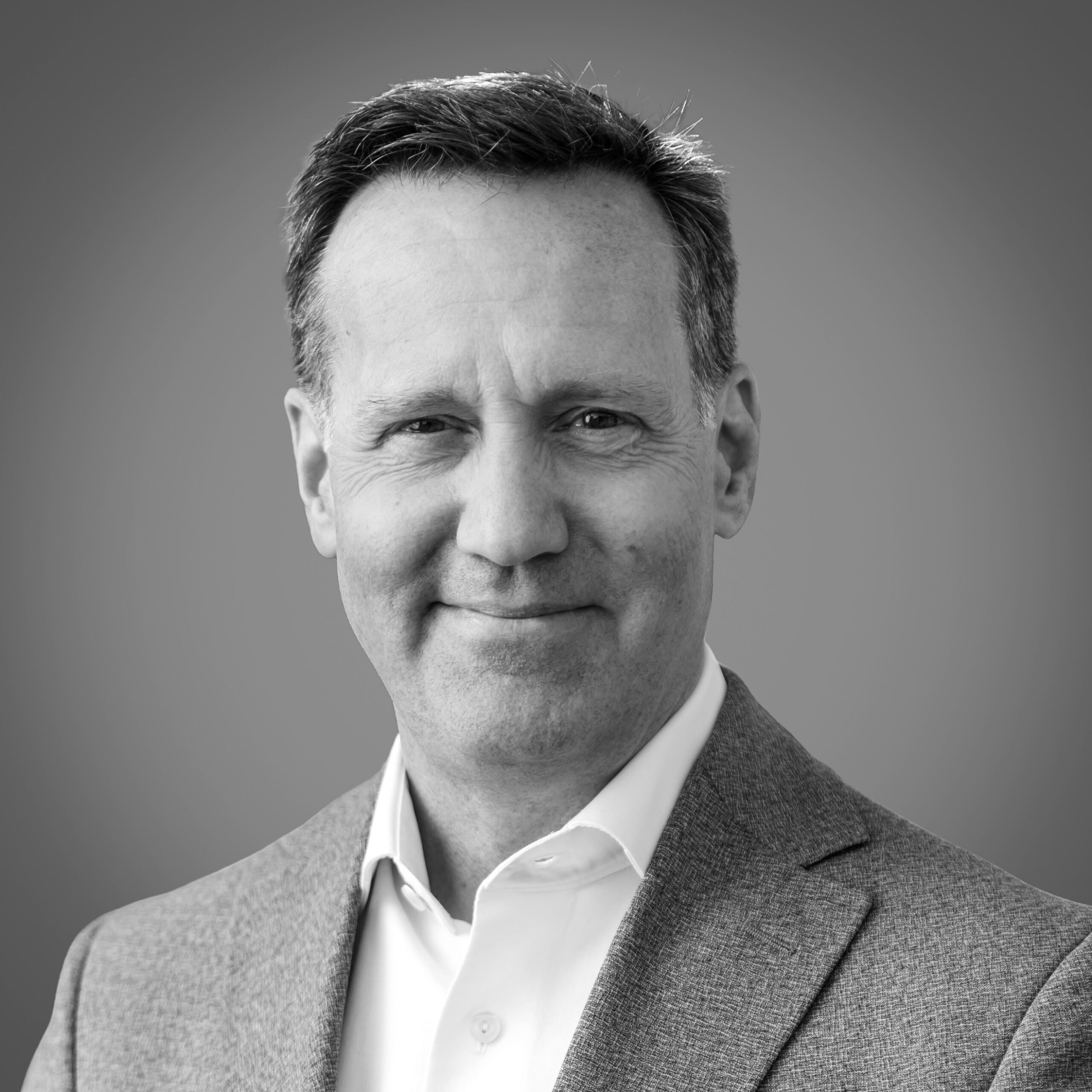
Larry Rohrbough
Executive Director, TCIP Center
Larry Rohrbough is Executive Director of the Technology Competitiveness and Industrial Policy Center (TCIP Center) at the University of California, Berkeley. Larry has experience in leading multi-university, interdisciplinary research institutes, managing public/private research and development initiatives, software engineering, technology consulting, and program management. In addition to helping launch the TCIP Center, Larry is Executive Director of the C3.ai Digital Transformation Institute, a global consortium dedicated to accelerating the benefits of artificial intelligence for business, government, and society and advancing the science of digital transformation. Prior to that, Larry was Executive Director of the Siebel Energy Institute and the TRUST Science & Technology Center, an inter-disciplinary center focused on building scientific foundations of cybersecurity and secure critical infrastructure systems and addressing the policy, legal, social, and economic implications of technology-based solutions, Prior to joining UC Berkeley, Larry was Chief Technology Officer of the ESCHER Research Institute, a non-profit organization focused on transitioning government-sponsored open source technology and tools from the research community to industry and government.
Larry holds a B.S. in Systems Analysis from Miami University and an M.S. in Software Systems Engineering from George Mason University.
S. Shankar Sastry
Faculty Director, TCIP Center and Thomas M. Siebel Professor in Computer Science, University of California, Berkeley
Shankar Sastry is the Thomas M. Siebel Professor in Computer Science and holds faculty appointments in the departments of Electrical Engineering and Computer Sciences, Bioengineering, and Mechanical Engineering, all at the University of California, Berkeley. From 2008 to 2018 he was the Dean and Roy W. Carlson Professor of Engineering at Berkeley and from 2004 to 2007 he was the Director of the Center for Information Technology Research in the Interest of Society (CITRIS), an interdisciplinary center spanning UC campuses at Berkeley, Davis, Merced, and Santa Cruz. He has served as Chairman, Berkeley Department of Electrical Engineering and Computer Sciences, Director of the Information Technology Office at DARPA, and Director of the Electronics Research Laboratory at Berkeley. Prior to joining the EECS faculty in 1983, he was a professor at MIT. He received his Ph.D. in 1981 from the University of California, Berkeley.
His areas of research are embedded and autonomous software, computer vision, computation in novel substrates such as quantum computing, nonlinear and adaptive control, robotic telesurgery, control of hybrid and embedded systems, network embedded systems, and software. He has been concerned with cybersecurity and critical infrastructure protection, and helped establish the NSF Science and Technology Center Team for Research in Ubiquitous Secure Technology (TRUST). He has coauthored over 650 technical papers and 10 books and supervised over 65 doctoral students and over 50 MS students to completion.

H.-S. Philip Wong
Willard R. and Inez Kerr Bell Professor, Stanford University
H.-S. Philip Wong is the Willard R. and Inez Kerr Bell Professor in the School of Engineering at Stanford University. Prior to that, he was with the IBM T.J. Watson Research Center and served as the Vice President of Corporate Research at TSMC, where since 2020 he remains the Chief Scientist of TSMC in a consulting, advisory role. He is a Fellow of the IEEE and received the IEEE Andrew S. Grove Award, the IEEE Technical Field Award to honor individuals for outstanding contributions to solid-state devices and technology, as well as the IEEE Electron Devices Society J.J. Ebers Award, the society’s highest honor to recognize outstanding technical contributions to the field of electron devices that have made a lasting impact.
He is the founding Faculty Co-Director of the Stanford SystemX Alliance – an industrial affiliate program focused on building systems and the faculty director of the Stanford Nanofabrication Facility – a shared facility for device fabrication on the Stanford campus that serves academic, industrial, and governmental researchers across the U.S. and around the globe, sponsored in part by the National Science Foundation. He is the Principal Investigator of the Microelectronics Commons California-Pacific-Northwest AI Hardware Hub, a consortium of over 40 companies and academic institutions funded by the CHIPS Act. He is a member of the US Department of Commerce Industrial Advisory Committee on microelectronics.